戴森家族辦公室大重組:剖析英國首富的家族傳承與財富規劃策略
引言:從創新巨擘到財富傳承的佈局者
身為英國首富,詹姆士・戴森爵士(Sir James Dyson)憑藉其創新的科技產品,積累了約 165 億美元的驚人財富。然而,這位發明家的目光顯然已超越其聞名全球的同名科技公司。如今,戴森正透過其家族辦公室「Weybourne」,對這筆龐大資產進行一場深刻的戰略重塑。在全球面臨稅務審查日益嚴格、地緣政治變動加劇以及史上最大規模跨代財富移轉的當下,戴森的舉措無疑提供了一個極具參考價值的案例。本文將深入剖析戴森家族辦公室近期的重大重組,探討其對家族傳承(family succession)規劃所釋放的信號,並分析這些佈局如何與更廣泛的財富保值與傳承(包括遺產稅 Inheritance Tax, IHT 等考量)相互關聯。
1. 解構 Weybourne:戴森的私人財富引擎
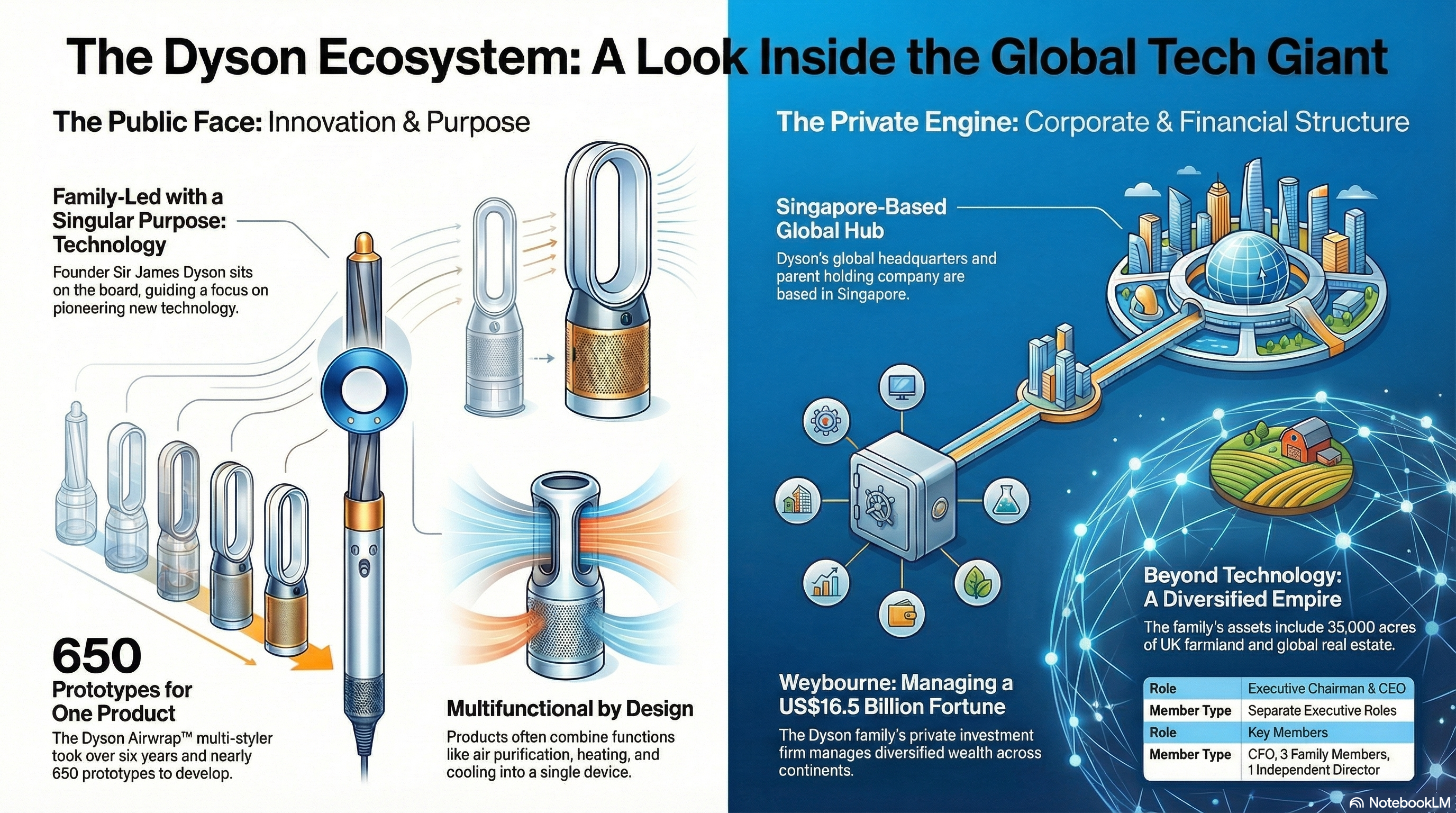
所謂「家族辦公室」(family office),是指專為單一超高淨值家族管理財富與投資的私人投資公司。戴森的家族辦公室「Weybourne」正是此類機構的典型代表。Weybourne 成立於 2013 年,其名稱源於戴森爵士童年成長的英格蘭海濱村莊,這也反映了創辦人的個人淵源。如今,Weybourne 已發展成為一個擁有超過 70 名員工、橫跨倫敦和新加坡兩大金融中心的專業化管理機構。
2. 戰略重心東移:從英國到新加坡的關鍵舉措
近期,Weybourne 進行了一系列精準的企業與財務重組,將其戰略重心明顯轉向亞洲。這些關鍵舉措清晰地揭示了戴森家族財富版圖的未來走向:
- 資金轉移: Weybourne 已將至少 6.24 億英鎊(約 11 億新元)的資金,從其主要的英國實體轉移至其位於新加坡的控股公司。
- 股本削減: 與此同時,其英國部門的股本被大幅削減至僅剩 1 英鎊。
- 總部協同: 此舉與戴森科技公司的全球總部同樣設在新加坡的佈局高度一致。這種地理上的協同不僅能提升運營效率,更能簡化治理架構,使家族財富管理與其核心事業的價值創造引擎緊密結合,是現代家族企業管理的關鍵目標。
- 地產業務調整: Weybourne 關閉了兩家負責地產投資的英國公司,並將部分股本轉移至一個新加坡的實體。
3. 管理層接班:為家族辦公室的未來奠定基礎
此次重組不僅是資產的轉移,更伴隨著核心領導層的代際更迭,這被外界解讀為其家族傳承規劃的關鍵一步。Weybourne 任命了新的領導團隊,由戴森集團的法務資深人士 Martin Bowen 接替服務超過十年的前任 CEO James Bucknall。此外,Jane Simpson 被擢升為財務資產的投資總監,而 Alastair Peters 則出任財務總監。
分析指出,這些人事變動極有可能是「多年期傳承路線圖(multi-year succession road map)」的一部分,是一項深思熟慮的「長期規劃」。值得注意的是,新任高管團隊普遍比其前任年輕,這不僅標誌著戴森家族財富傳承的考量,也體現了將家族辦公室「機構化」(institutionalize)的深層意圖,確保其能夠超越創始人核心顧問的任期,成為一個自我持續的永續實體。
4. 深度解析:財富多元化與長遠規劃的策略意涵
戴森家族辦公室的重組行動,背後蘊含著清晰的戰略邏輯,主要圍繞財富的多元化配置與長遠的跨代傳承規劃。
4.1. 財富多元化
儘管戴森的財富驚人,但其絕大部分資產仍高度集中於其科技公司。因此,本次重組是進一步分散風險、實現財富多元化的重要策略。為此,戴森家族採取了雙管齊下的財務佈局:首先,透過一次性轉移 6.24 億英鎊的資金,為新加坡控股公司注入了強大的初始資本;其次,其吸塵器製造公司承諾將年度股息提高至 2.25 億英鎊,扭轉了近年派息下降的趨勢,這將為家族辦公室提供可持續的長期資金流。這筆穩定的現金流將為 Weybourne 在全球範圍內進行更多元化的資產配置提供彈藥。
4.2. 應對複雜性:如遺產稅(IHT)等考量
對於像戴森這樣規模的全球性財富而言,長期的規劃與家族傳承策略無可避免地需要應對複雜的國際稅務環境。雖然相關文件並未明確說明此次重組的具體動機,但從財富管理的專業角度來看,將資產和企業實體進行戰略性地域轉移,是超高淨值家族辦公室常用的工具。此類操作旨在確保財富能夠高效地為後代保值並順利傳承,其考量因素通常會涵蓋遺產稅(IHT)等複雜稅務問題。因此,將控股公司遷往新加坡這樣的國際金融中心,可被視為在全球佈局中尋求更優化、更穩健的財富管理架構的一部分。
結論:從戴森的家族辦公室策略中學到的課題
戴森家族辦公室的案例為全球超高淨值家族的財富管理與傳承提供了極具價值的實踐藍圖。其策略核心可歸納為以下幾點可供借鑒的課題:
- 積極主動的傳承規劃: 成功的財富傳承並非被動等待,而是需要主動、深思熟慮的長期佈局。戴森從資產轉移到領導層換屆,每一步都指向一個清晰的多年期傳承藍圖,這對確保家族財富平穩過渡至關重要。
- 專業化治理的制度化: 引入新一代、更年輕的專業領導層(CEO、CIO、CFO)是將家族辦公室「機構化」的關鍵。這確保了家族辦公室的決策與運營不會過度依賴創始人或某一代管理者,從而能夠持續成功並適應未來的挑戰。
- 核心業務與財富管理的戰略協同: 將家族辦公室的控股實體與核心事業的全球總部設在同一地點(如新加坡),是極具遠見的地緣策略。此舉不僅能最大化運營效率、簡化治理,更能確保財富管理策略與家族價值創造的主要引擎保持一致,有效降低潛在的摩擦與風險。
The Dyson Succession: How a US$17 Billion Family Office is Pivoting from the UK to Singapore
Introduction: The Reshaping of a British Empire
Sir James Dyson, one of Britain’s most prominent inventors and its richest person with a net worth of approximately US$16.5 billion, is undertaking a significant and strategic restructuring of his family’s investment firm, Weybourne. This financial and operational shift from the United Kingdom to Singapore represents more than just corporate housekeeping; it is a key move in the long-term family succession planning for the vast Dyson empire. The restructuring of this massive family office signals a clear intent to anchor the future management of one of the world’s great technology fortunes in Asia.
1. Weybourne: The Engine Room of the Dyson Fortune
What is a Family Office?
A family office is a private wealth management and investment firm that serves ultra-high-net-worth individuals and their families. Weybourne, the Dyson family’s investment vehicle, is a prime example of this model in action. Established in 2013, the firm is named after a coastal village in the part of England where James Dyson grew up. Its primary mandate is to diversify the family’s fortune, which remains largely concentrated in the eponymous technology company, and manage it for future generations. With more than 70 employees across its London and Singapore offices, Weybourne operates on a scale few family investment firms can match.
2. A Strategic Pivot to Singapore: Following the Money
Weybourne has executed a series of decisive financial and corporate maneuvers that methodically shift its center of gravity towards Singapore. The strategic implication here is a clear alignment with the Dyson technology company’s global headquarters, which is also based in the city-state.
The key restructuring actions include:
- The transfer of at least £624 million (S$1.1 billion) from a major UK entity to its Singapore holding company.
- The reduction of the corresponding British unit’s share capital to just £1.
- The closure of two UK firms that managed property investments, with part of their share capital also being transferred to a Singapore-based entity.
This series of transactions, particularly the reduction of the UK unit’s share capital to a nominal £1, represents a financial hollowing-out, effectively transforming the British entity into a shell while concentrating the family’s liquid assets within the Singaporean corporate structure.
In a further sign of this strategic pivot, Weybourne is actively recruiting for a “new team” in Singapore tasked with supporting a multi-asset investment portfolio. This build-out of a new Singapore-based team is being overseen not by the old guard, but by a new generation of leadership installed to steer the family’s wealth into its next chapter.
3. New Leadership for a New Era: Planning for Succession
The corporate restructuring has coincided with a significant generational shift in the leadership at Weybourne. The retirement of CEO James Bucknall after more than a decade is a classic maneuver in long-term wealth planning. For ultra-high-net-worth families, installing a younger executive team with a long career runway is a critical step in ensuring strategic continuity and stability, well before the founder’s heirs are expected to take control.
The new leadership includes:
- Martin Bowen, a former legal veteran from Dyson Group, who became CEO in February.
- Jane Simpson, who was promoted to Chief Investment Officer.
- Alastair Peters, formerly of BlackRock, who took on the role of Chief Financial Officer.
Industry analysts interpret these simultaneous changes in structure and leadership as deliberate and strategic. According to one analysis, these moves are likely “part of a multi-year succession road map” and represent “long-term planning,” directly linking the corporate pivot to the core objective of family succession.
4. The Broader Context: Wealth Structuring and Inheritance Tax (IHT)
The strategic decisions made by the Dyson family office are reflective of the complex challenges and sophisticated strategies employed by ultra-high-net-worth families around the world. When planning for the transfer of immense wealth to the next generation, one of the most significant considerations, particularly for families based in the UK, is Inheritance Tax (IHT).
While the source context does not explicitly name IHT as a reason for the Dyson family’s moves, comprehensive family succession planning for a fortune of this scale almost invariably involves structuring assets across different legal and tax jurisdictions. This is a standard wealth management principle designed to ensure an efficient and predictable transfer of assets while mitigating potential tax liabilities. The Weybourne restructuring serves as a powerful, real-world case study of how such principles are put into practice on a global scale.
5. Conclusion: A Blueprint for the Modern Billionaire Dynasty
Sir James Dyson is actively reshaping his vast fortune through his family office, Weybourne, executing a clear and decisive financial and operational pivot from the UK to Singapore. This strategic realignment is being driven by a new, younger leadership team and is widely understood to be a core component of a meticulous, long-term family succession strategy. The Dyson case illustrates a new paradigm for British billionaire dynasties: building an empire on UK innovation, but securing its future legacy within the strategic and financial safe harbor of Singapore.